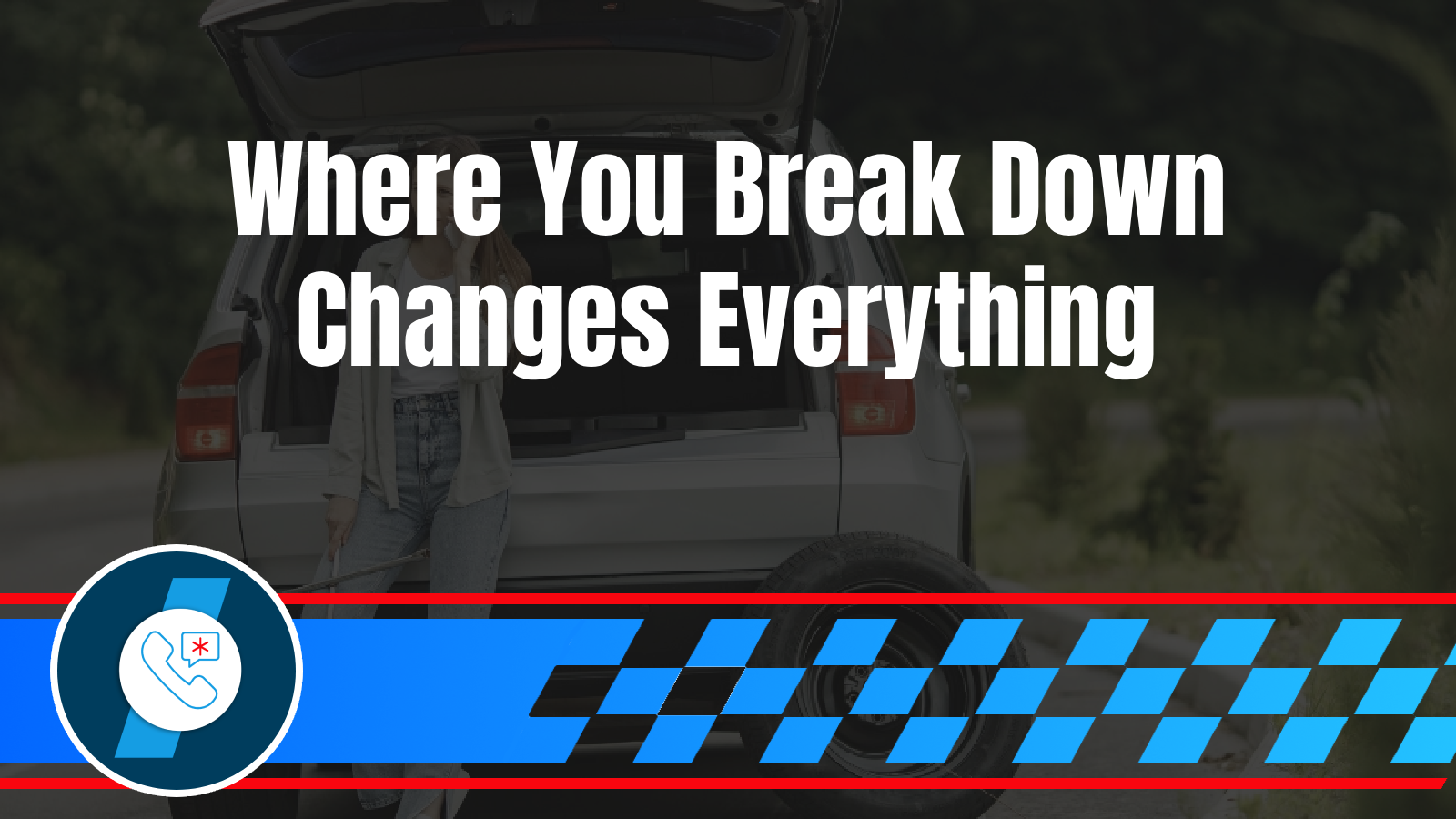
Why Your Breakdown Location Matters: Highway, Parking Lot, or Residential Street Towing
Where your car quits has as much to do with the tow as what went wrong under the hood. A breakdown on the shoulder of I-435 is a very different situation from a no-start in a warehouse-store parking lot or a stall on a quiet Olathe side street. Each location brings its own hazards, access challenges, and priorities, and an experienced tow operator reads all of that before the truck even arrives.
Why Location Shapes Every Tow
Two identical cars with the same dead battery can require completely different responses depending on where they stopped. Location determines how urgent the safety risk is, how the truck can approach, whether traffic must be managed, and how quickly help needs to arrive. A good dispatcher asks where you are first for exactly this reason: the answer changes which truck is sent, how fast it rolls, and what the driver plans for on the way.
Breaking Down on the Highway
A highway breakdown is the most dangerous by far. On I-70 or I-35, vehicles pass within feet at seventy miles an hour, and a stalled car on the shoulder is a serious hazard to you and to the operator. Speed and safety are everything here. The priority is to reach you quickly, position the truck to shield the work area, and get your vehicle loaded and clear of traffic as fast as possible. If you are on a narrow shoulder, staying inside the car buckled up or well beyond the guardrail is far safer than standing beside the lane.
Stranded in a Parking Lot
A parking lot feels safe, and it usually is, but it brings access puzzles instead. Tight rows, low garage ceilings, concrete pillars, and cars boxed in on both sides can make it hard to get a truck into position. A full-size flatbed may not fit inside a parking structure, so a nimble wheel-lift is sometimes the answer. The pace is calmer than a highway call, but the operator still has to solve how to reach the vehicle and extract it without dinging the cars parked around it.
Stuck on a Residential Street
Residential streets in Shawnee, Mission, or Overland Park bring their own quirks: parked cars narrowing the lane, tight cul-de-sacs, low-hanging branches, and neighbors’ driveways to respect. There is usually less urgency than on a highway, but maneuvering room can be scarce. An operator who knows the metro’s neighborhoods plans the approach and the loading angle so the vehicle comes out cleanly without blocking the whole block or scraping a parked car.
What You Can Do Wherever You Are
- Turn on your hazard lights the moment you sense trouble
- Get the car as far off the travel lane as safely possible
- On a highway, exit away from traffic or stay buckled inside
- Note your nearest exit, cross street, or mile marker for dispatch
- Share the exact location so the right truck is sent the first time
When Weather Changes the Location Risk
The same spot can be safe one day and hazardous the next once weather enters the picture. An icy shoulder on I-635 gives a stalled car and an approaching truck far less traction, and a summer downpour cuts visibility on a busy interchange. Heat is its own factor, since a breakdown in a shadeless lot during a July afternoon is hard on anyone waiting inside. We factor the forecast into how quickly and how carefully we respond to where you are.
How We Adapt to Kansas City’s Roads
Every part of the metro presents something different, from packed downtown garages to open interstate shoulders to winding suburban streets, and each demands a tailored approach. Kansas weather layers on more, since ice or heavy rain raises the stakes on a busy highway shoulder. Knowing the local roads means we send the appropriate truck, plan the safest approach, and arrive ready for the specific spot you are stuck in rather than a generic one.
Broken down anywhere in the Kansas City metro? Call Kansas Towing at (816) 608-4886 and we will come prepared for your exact location. Learn about our breakdown towing, emergency towing, and 24-hour towing.