
The Hidden Costs of Keeping a Dead Car in Your Driveway (Insurance, Fines, and Property Value)
That non-running car in your driveway feels free to keep. It is paid off, it is not hurting anyone, and you might fix it up someday. But across the Kansas City metro, from Overland Park cul-de-sacs to older neighborhoods in Shawnee, a dead vehicle quietly costs its owner money every single month. Once you add up the insurance, the code-enforcement risk, and the hit to your property, hanging onto it rarely pencils out.
The Insurance You Are Still Paying For
Many owners keep at least liability coverage on an immobile car so their policy does not lapse, and that premium adds up year after year for a vehicle that never turns a wheel. Drop the coverage entirely and you risk a registration lapse or a gap in your insurance history that raises rates on your next car.
Some drivers assume a stored car costs nothing to insure, but even comprehensive-only coverage carries a monthly charge. Multiply that by the years a project car often sits, and you have paid a small fortune to protect metal that is only depreciating.
City Codes and HOA Fines
Most metro cities treat an inoperable, unregistered vehicle as a nuisance. Municipal code enforcement in places like Olathe, Lenexa, and Kansas City can issue notices, daily fines, and even authorize removal if a flat-tired or tarp-covered car sits too long in view.
Homeowners associations are often stricter still. A single neighbor complaint can trigger warning letters and mounting penalties that dwarf what it would have cost to haul the car away in the first place.
What It Does to Your Property Value
Curb appeal is real money when you sell or refinance. A rusting vehicle on the driveway signals neglect to buyers and appraisers alike, and it drags down the impression of an otherwise well-kept home. Prospective buyers touring your street notice it before they ever walk inside, and first impressions are hard to undo once they form.
The Slow Damage You Do Not See
A parked car does not just sit there politely. Over a few Kansas winters and humid summers, it becomes a liability in ways that are easy to miss.
- Old fluids seep out and stain concrete or leach into the soil.
- Mice and other pests nest in the seats, wiring, and air ducts.
- Standing water in clogged drains breeds mosquitoes each summer.
- Freeze-thaw cycles and road-salt residue accelerate rust underneath.
When It Is Time to Let It Go
If the repair estimate is climbing toward the car’s value, if parts are hard to find, or if “someday” has stretched into years, the math has already answered the question. A vehicle you are not driving is not a project; it is a slow expense sitting in your driveway, and letting it go frees up both space and money.
How Removal Actually Works
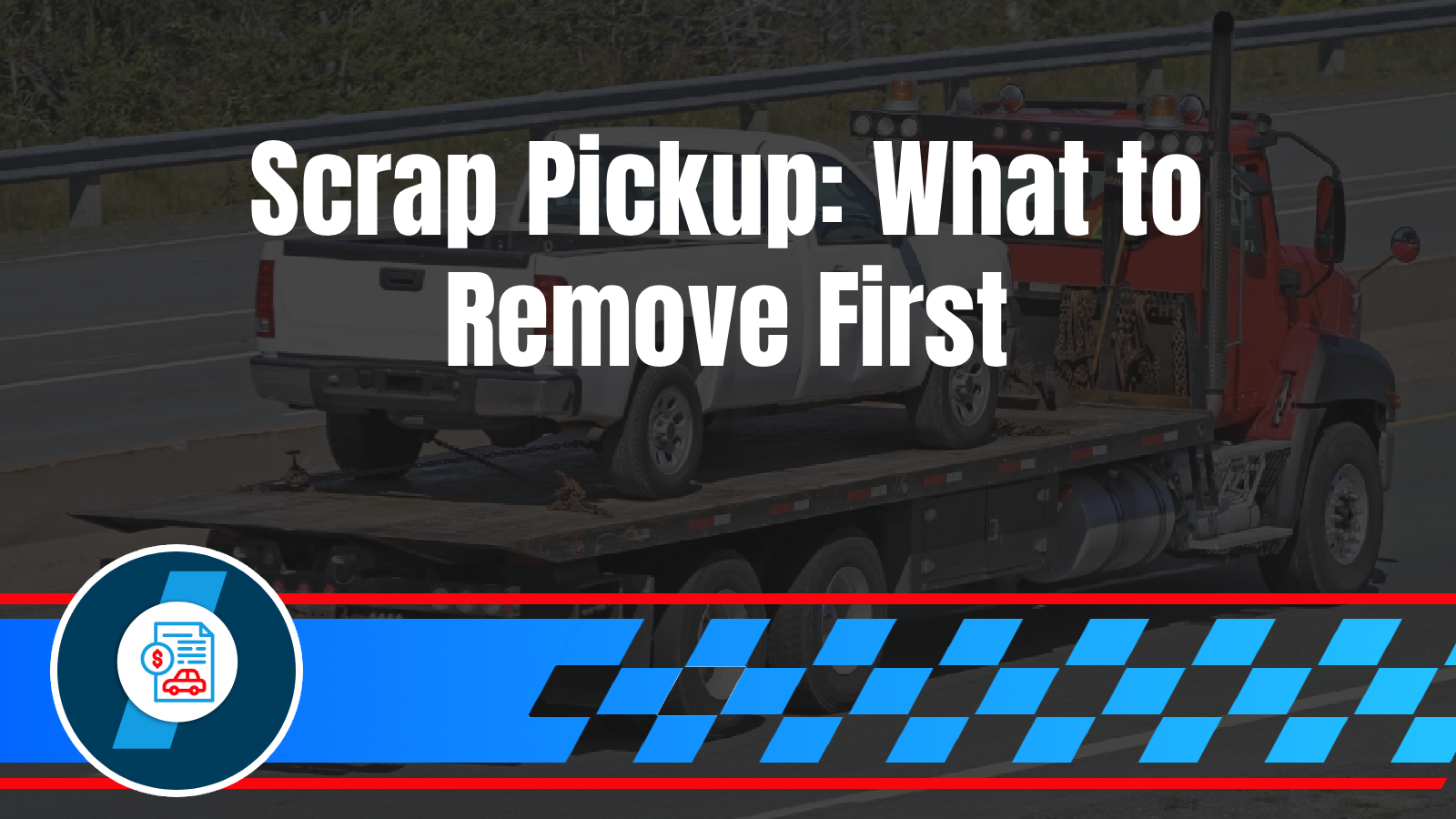
Getting rid of it is far simpler than most owners expect. A scrap car does not need to run, hold air, or even have all four tires. A flatbed can retrieve a vehicle that has not moved in years.
- You provide the title and a few basic details about the car.
- A truck is dispatched to your Kansas City metro address.
- The vehicle is winched or lifted onto a flatbed and hauled off.
- Your driveway is clear, with no fines or leaks left behind.
Ready to reclaim your driveway anywhere in the Kansas City metro? Stop paying to store a car you will never drive. Call Kansas Towing at (816) 608-4886. Learn about our scrap car removal, damage-free flatbed towing, and get a quick quote with our towing cost estimator.


