Stuck on a Curb or Embankment? How Recovery Experts Extract Vehicles Without Damage
A wheel that slips off the pavement onto a soft shoulder, a bumper hung up on a tall curb, or a car nosed down an embankment after a slick winter morning can strand even careful Kansas City drivers. These situations look simple but rarely are. Getting a vehicle back onto solid ground without bending a control arm or tearing off an undercarriage panel takes the right gear and a measured approach.
How Kansas City Drivers End Up Stuck
The metro produces a predictable mix of stuck-vehicle calls. Ice storms glaze the ramps along I-435 and I-635, sending tires over the edge of a shoulder. Heavy spring rain softens the ground beside residential streets in Shawnee and Mission, turning a routine pull-off into a mud trap. High curbs in older Overland Park and Olathe neighborhoods catch low front ends, and construction detours leave drivers hunting for room they do not have.
In each case the vehicle is usually intact but pinned by geometry, gravity, or a lack of traction. The car is not broken so much as trapped, and that distinction changes how it should be freed.
Why Trying to Drive Out Often Makes It Worse
The instinct to spin the tires and power free is understandable, and it is usually the wrong move. Beneath a stuck car the suspension, oil pan, exhaust, and plastic underbody panels sit close to whatever the vehicle is resting on. Flooring the accelerator can grind a sidewall against a curb until it fails, drive a front splitter deeper into an embankment, or overheat a transmission that is already straining.
Rocking a heavy vehicle on soft ground only digs the wheels in further and can snap an axle. What began as a five-minute recovery becomes a repair bill.
The Recovery Equipment That Does the Job Safely
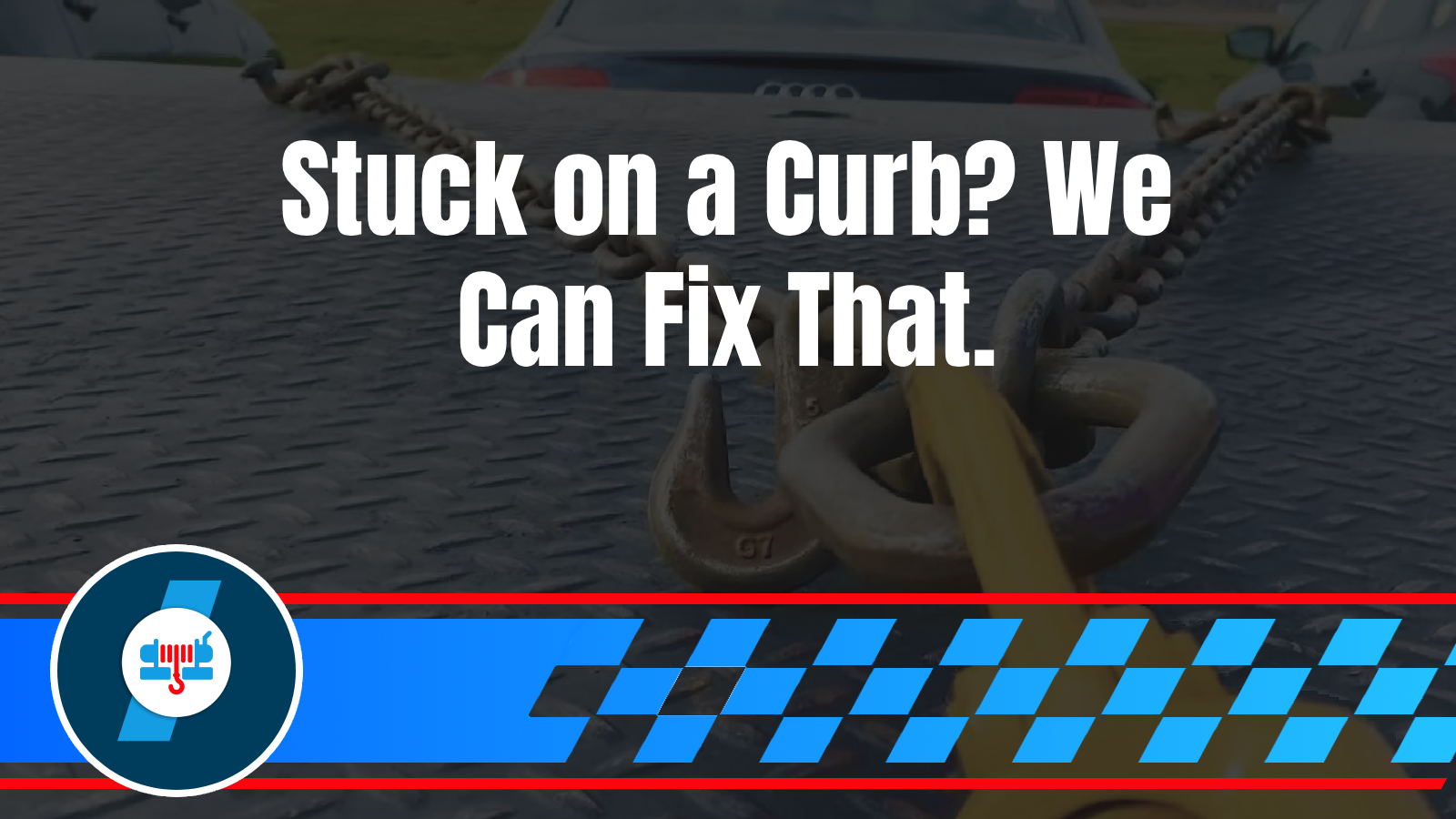
Professional recovery is less about brute force and more about controlled, distributed pulling. A properly outfitted truck carries the tools to move a vehicle in the direction it needs to go without loading any single point too hard:
- Winches with rated line and steady, variable-speed control
- Snatch blocks that redirect the pull and multiply effective power
- Wide recovery straps that spread force instead of concentrating it
- Traction boards and cribbing to build a stable surface under spinning wheels
- Flatbed decks so a freed vehicle can be loaded without driving it on damaged tires
Techniques That Keep Your Vehicle Damage-Free
Good operators plan the pull before touching a cable. They locate factory recovery points rather than hooking onto a suspension arm or bumper bracket never meant to take the load. They set the angle so the vehicle rolls up and out instead of being dragged sideways across a curb. On an embankment, cribbing and boards create a ramp so the tires climb rather than gouge.
When ice is the culprit, spreading traction material and easing tension slowly prevents the sudden lurch that damages driveline components. Patience protects the car.
What to Do While You Wait for Recovery
Once you have called for help, the safest thing you can do is leave the vehicle where it is. Switch on your hazard lights, and if you are on a shoulder along I-35 or I-635, step well away from moving traffic while you wait. Resist the urge to let a passerby push or tug the car with a strap of unknown rating, which is how bystanders get hurt and bumpers get torn loose. A short wait for the right equipment almost always beats a rushed attempt that adds damage.
When Recovery Turns Into a Tow
Sometimes freeing the vehicle is only half the job. If a wheel is folded under, a tire blew against the curb, or fluids are leaking, the safest choice is to load the car on a flatbed and move it to a shop. Our crews evaluate the vehicle once it is back on level ground and give you a straight answer about whether it is drivable, which protects you from a second breakdown a mile down the road.
Stuck on a curb, shoulder, or embankment anywhere in the Kansas City metro? Call Kansas Towing at (816) 608-4886 for careful, damage-conscious recovery. Learn more about our winching and recovery service, our flatbed towing, and our 24-hour towing coverage across the metro.