
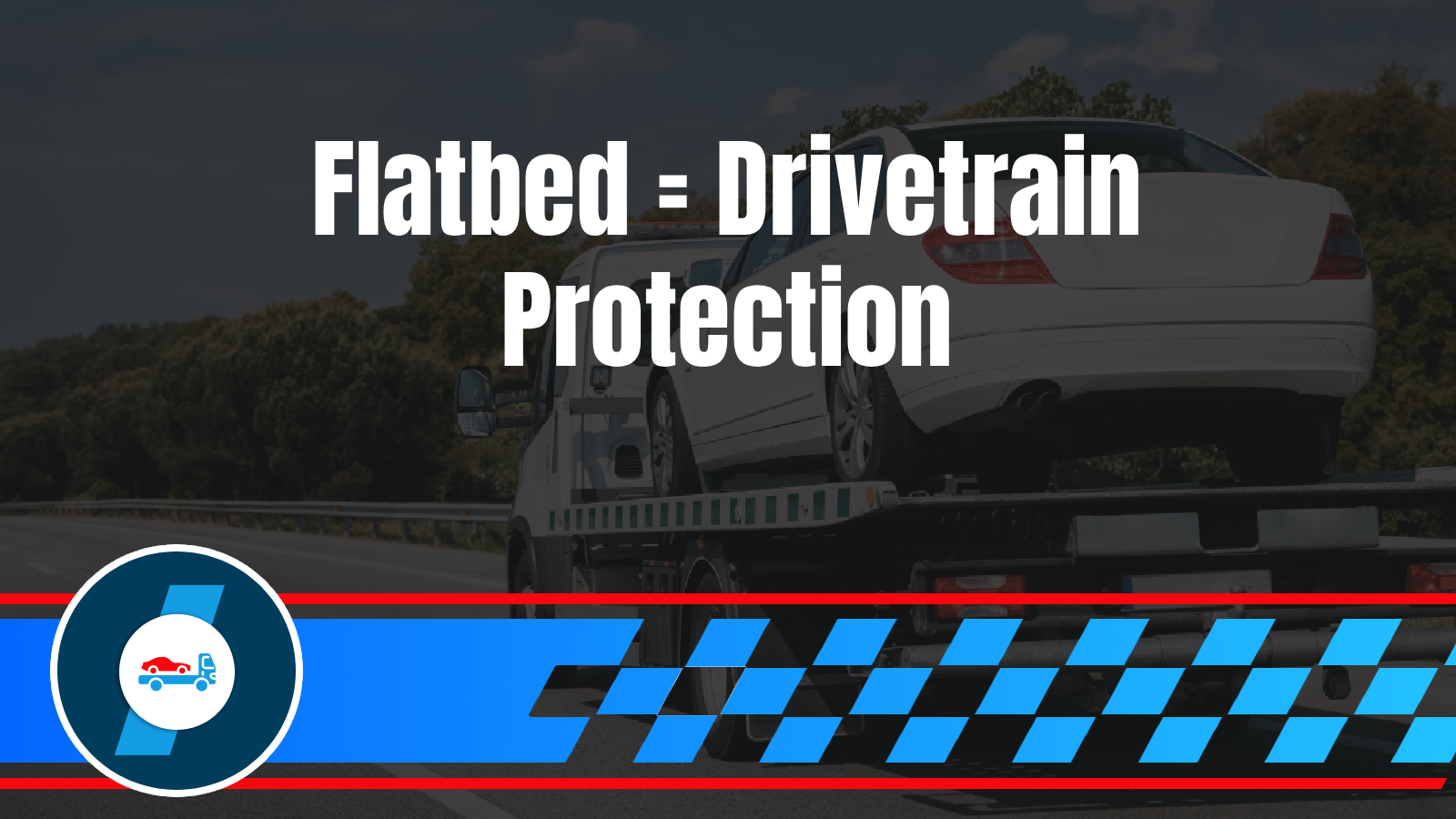
Does Your Vehicle Actually Need Flatbed Towing? AWD, 4WD, and When It’s Required
Not every vehicle can be safely towed with two wheels on the ground, and getting it wrong can mean thousands of dollars in drivetrain damage. For many Kansas City drivers, especially those in all-wheel and four-wheel-drive vehicles, a flatbed is not a luxury but a genuine requirement. Understanding when your vehicle needs one protects both your car and your wallet.
The Difference Between Tow Types
A traditional wheel-lift tow raises two wheels and leaves the other two rolling on the pavement. A flatbed, by contrast, lifts the entire vehicle onto a level deck so no wheels turn at all during transport. That single distinction is harmless for some cars and absolutely critical for others, depending on how power reaches the wheels.
For the wrong vehicle, letting two wheels spin down I-435 for miles can quietly destroy expensive components long before you ever notice a problem.
Why AWD and 4WD Demand a Flatbed
All-wheel and four-wheel-drive systems connect all four wheels through a network of differentials, transfer cases, and driveshafts. When two wheels roll while the others are lifted, that mismatch forces the drivetrain to turn without the engine, generating heat and wear it was never designed to handle. The result can be a failed transfer case or transmission.
Manufacturers of these vehicles routinely specify flatbed transport, and ignoring that guidance risks a repair bill far larger than the tow itself.
Other Vehicles That Need a Flatbed
AWD and 4WD are not the only cases. Low-clearance sports cars, luxury vehicles, and classics all benefit from the gentler handling of a flatbed. Certain transmission types, or vehicles that are already damaged, also ride far better fully off the ground. Common situations that call for a flatbed rather than a wheel-lift tow include:
- All-wheel and four-wheel-drive vehicles per the owner’s manual
- Low or performance cars that would scrape on a tilt bed
- Vehicles with severe front or rear damage after a crash
- Luxury or collector cars where finish and value matter
- Any car with a locked or seized wheel that cannot roll freely
The Risk of Choosing Wrong
Skipping the flatbed to save a little money is a gamble that often backfires. Transmission and drivetrain repairs frequently run into the thousands, dwarfing the modest difference in tow cost. Even a short improper tow can cause damage that does not surface until later, making it hard to connect the eventual failure back to its cause.
When in doubt, the safe choice is always the flatbed, particularly for a modern vehicle you plan to keep for years.
Why a Flatbed Helps in Kansas Conditions
Local weather makes the case even stronger. On ice-glazed winter roads around Shawnee and Mission, a vehicle rolling on two wheels behind a truck is harder to control, while a fully loaded flatbed keeps everything stable. In summer heat, a long tow with turning wheels adds friction and temperature to a drivetrain that may already be stressed from the breakdown.
A flatbed removes those variables by carrying the vehicle rather than rolling it, which is why so many metro tows use one by default.
How to Know What Your Car Needs
Your owner’s manual is the final word; it will state plainly whether flat towing is allowed. If you are unsure, tell the towing company your exact make, model, and drivetrain when you call, and they will recommend the right equipment. A reputable operator would rather send a flatbed than risk your vehicle on the streets of Olathe or Lenexa.
A quick, honest conversation upfront removes all the guesswork and protects your investment.
Get the Right Truck the First Time
Do not leave your drivetrain to chance. Kansas Towing sends the correct equipment for your vehicle across the Kansas City metro every time. Call (816) 608-4886 for proper flatbed towing, fast breakdown towing, and reliable 24-hour service when it counts.


