
Lowered, Modified, or Custom? How Flatbed Towing Handles Low-Clearance Vehicles
A slammed sedan, a modified sports coupe, or a custom build with a deep lip kit turns an ordinary tow into a delicate operation. The features that make these cars look incredible, ground-hugging ride height and aggressive body kits, are exactly what a careless tow truck destroys. For owners across the Kansas City metro, understanding why flatbed towing is the only safe answer protects a build that took real time and money to create.
Why Low Clearance Breaks Standard Towing
A traditional wheel-lift or hook-and-chain tow raises one end of the car and lets the other end roll along the road. On a lowered vehicle, that dip is enough to grind a front lip, splitter, or exhaust across the pavement the moment the truck pulls away. Even a steep driveway apron or the edge of a parking lot can do damage before the tow even begins.
Add a modified suspension or a coilover setup and the margins shrink further. What clears fine at a crawl scrapes hard under towing angles, and the bill for a cracked bumper cover climbs quickly.
The Flatbed Advantage
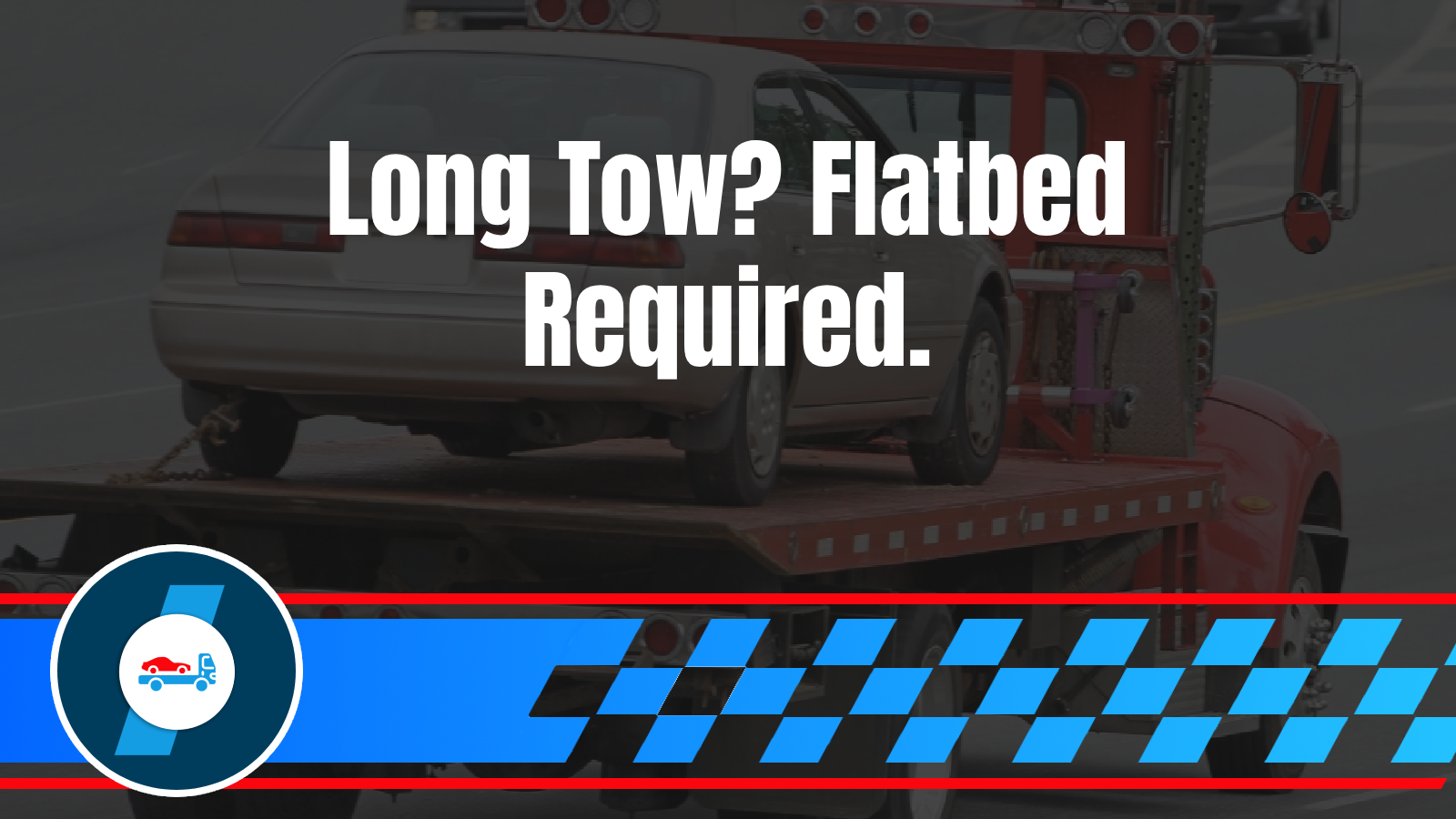
A flatbed, also called a rollback, solves the problem by bringing the road to the car. The bed tilts down to ground level and the vehicle is winched up a shallow incline, so all four wheels ride on a flat, stable surface. Nothing drags, nothing pivots, and the car travels exactly as it sits in your garage.
That stability is why flatbeds are the standard for anything precious or unusual, from a lowered daily driver to a track car headed to a shop across the metro.
Approach Angle and Loading Technique
Even with a flatbed, the approach angle matters. A skilled operator lengthens the ramp angle with the truck’s controls and often adds supplemental ramps to flatten the incline further, so a low front end clears the break point where the bed meets the ground. Careful winch speed keeps the car from bucking as it transitions onto the deck.
Rushing this step is where amateurs do damage. Winch it too fast and the nose can slam down as the car crests the ramp; pull at the wrong angle and a wheel can climb the rail. An experienced operator reads the car’s stance and adjusts before a single scrape ever happens, which is exactly the judgment you are paying for.
Extra Gear for the Toughest Builds
The lowest builds need more than a standard rollback. A crew that knows custom cars comes prepared with the right tools:
- Additional low-angle ramps to reduce the loading pitch
- Soft straps that secure the car without scratching wheels or paint
- Wheel-basket or over-the-tire tie-downs that avoid the suspension
- Wood or rubber to bridge the break-over point at the ramp
- The patience to load slowly rather than force the car up
These small details are the difference between a clean load and a scraped front end.
Vehicles That Should Always Ride a Flatbed
Lowered cars are not the only ones that benefit. Modified trucks with air suspension dropped to the ground, custom motorcycles, exotic and collector cars, and anything wearing a delicate body kit all belong on a flatbed rather than dangling from a hook.
When in doubt, ask for a flatbed by name. The small difference in equipment is cheap insurance against a repair bill that can run into the thousands on a custom paint job or a carbon body panel.
If your car sits low or wears a custom kit, insist on the right equipment. Call Kansas Towing at (816) 608-4886 for careful flatbed towing anywhere in the Kansas City metro, including long-distance transport when your build needs to travel farther than the local shop.


