
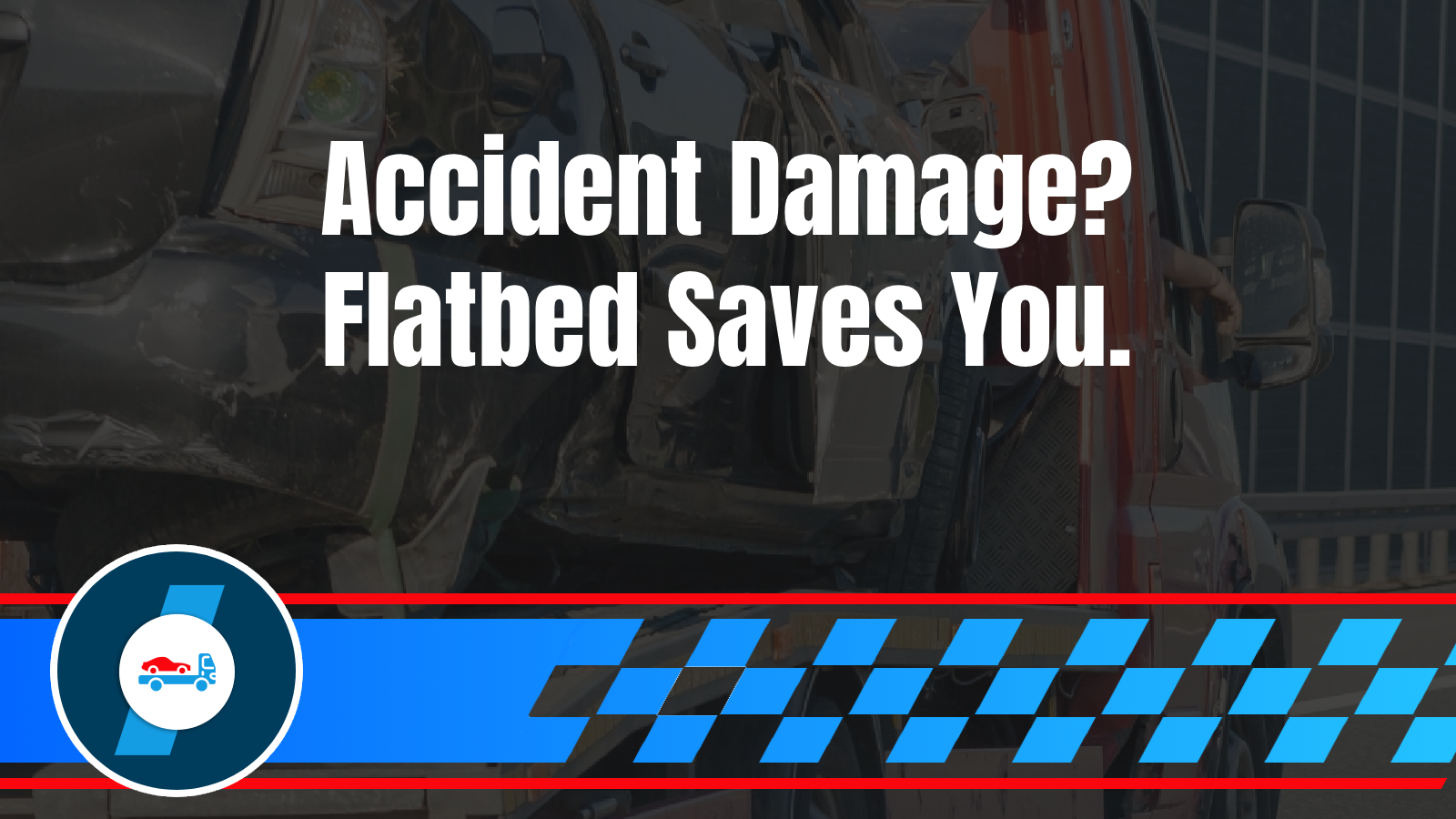
What Happens to Your Car on a Flatbed: Loading, Securing, and Transport Process Explained
Watching your car get loaded onto a flatbed can be nerve-wracking if you do not know what is happening. The good news is that flatbed towing is one of the gentlest, safest ways to move a vehicle, and every step follows a deliberate process. For drivers across the Kansas City metro, here is exactly what happens to your car from the moment the truck arrives until it is safely delivered.
Positioning the Truck and Bed
The process begins before your car ever moves. The operator positions the flatbed truck on a stable, level surface with enough room behind it, then hydraulically tilts and slides the bed down to the ground to form a ramp. Choosing a safe spot matters, especially on a busy Kansas City street or a sloped shoulder along I-70.
With the bed angled down, the truck is ready to receive your vehicle without any lifting that could jostle it.
Loading Your Vehicle Onto the Deck
Next comes the load. If your car runs and steers, the operator may carefully drive it onto the bed; if not, a winch pulls it up the incline with a steady cable. Either way, the pace is slow and controlled so the car tracks straight and nothing scrapes on the way up.
A skilled operator watches clearance the entire time, mindful of low bumpers and spoilers that can catch on the ramp’s angle.
Securing the Car for Transport
Once your vehicle sits on the deck, securing it is the most important step of all. The operator raises and levels the bed, then anchors the car at four points using wheel straps or chains rated for the load. These are tightened so the vehicle cannot roll, shift, or bounce, no matter the road conditions.
Proper tie-downs are what keep your car planted through turns, stops, and highway speeds, and a good operator double-checks every one before moving.
The Journey to Your Destination
With everything secured, the transport itself is smooth and uneventful, which is exactly the goal. Because all four wheels are off the ground, there is no drivetrain wear, no tire flat-spotting, and no risk to your transmission. Your car simply rides along, fully supported, whether the trip is across town or clear across the metro.
This is why flatbeds are the preferred choice for damaged, all-wheel-drive, and low-clearance vehicles alike.
Unloading and Handoff
Delivery reverses the loading steps with the same care. The operator finds a safe spot, tilts the bed, releases the straps, and eases the car back to the ground. A short checklist keeps the handoff clean:
- Confirming the drop-off location is safe and accessible
- Releasing tie-downs in the correct order
- Lowering the vehicle slowly and straight off the deck
- A quick walk-around to confirm the car’s condition
- Handing over keys and any paperwork directly to you
When to Ask for a Flatbed
Knowing the process helps you recognize when to request a flatbed rather than a standard wheel-lift truck. It is the smart call for low-slung sports cars that would scrape on a tilt, for all-wheel-drive vehicles that should not roll on their wheels, and for any car with fresh crash damage. Long trips across the metro also favor a flatbed, since keeping the wheels off the ground protects the vehicle over the miles.
When you call, mention your vehicle type so the operator can confirm whether a flatbed is the right tool for your situation.
Why the Process Protects Your Car
Every step exists to protect your vehicle from damage. The gentle loading angle spares your bumpers, the four-point tie-downs prevent shifting, and keeping the wheels off the ground eliminates the wear a conventional tow can cause. When the process is followed properly, your car arrives in exactly the condition it left.
Ride Safe on a Proper Flatbed
When your vehicle needs a careful lift anywhere in Kansas City, trust a crew that follows the process right. Call Kansas Towing at (816) 608-4886 for safe flatbed towing, reliable breakdown towing, and around-the-clock 24-hour service.


